Let their tummy set the pace.
Stool size can change with a new diet; smaller is not automatically better. If stools soften, pause the increase or return to the last tolerated mix. Resume only once settled, not through ongoing upset.

Fresh food explained
Real ingredients. Gentle cooking. Complete nutrition. Here’s how fresh feeding fits into everyday life.
Start with the food
Think of the care that goes into making dinner: meat, vegetables and fruit, thoughtfully prepared and gently cooked.
QualityFresh brings that idea to your pet’s bowl, with recipes balanced for dogs or cats. Our meals are cooked, kept chilled and ready to serve.
They need refrigeration because they are fresh, moist, perishable food. Keeping the bag chilled is part of keeping the meal fresh.
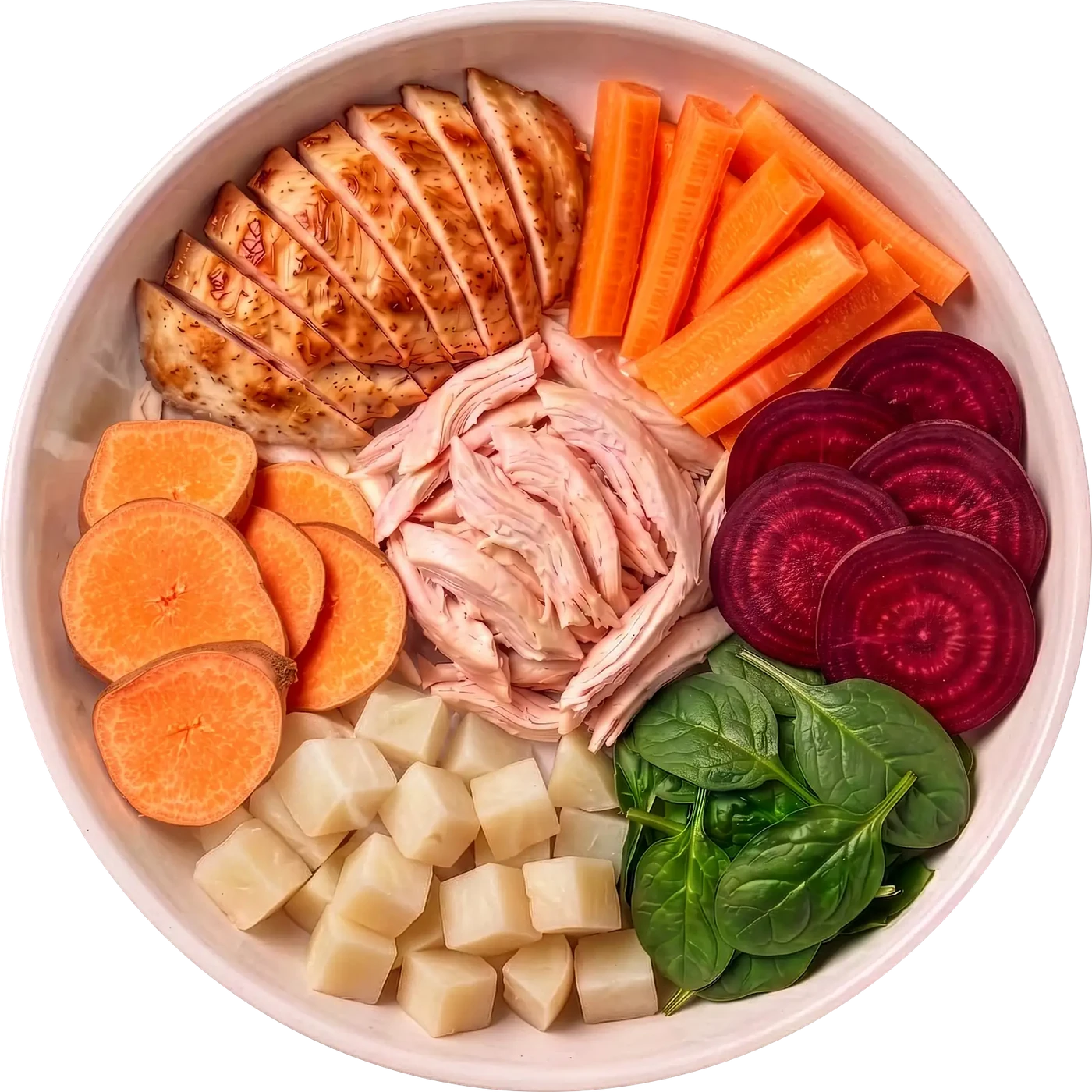
Fresh food vs dry kibble
Real meat. Natural moisture. No added water.
Same bowl.
A different way to feed.
| Look beyond the bowl | QualityFresh fresh meals | Conventional extruded kibble |
|---|---|---|
| The ingredients | Meat or fish, with vegetables, vitamins & minerals. | May include meat meals, fresh meat and milled ingredients. |
| The process | Gently steam-cooked. Not extruded. | Heat. Pressure. Extrusion. Drying. |
| The moisture | Naturally moist from real meat. No added water. | Moisture removed to create dry kibble. |
| In the bowl | Tender, moist, meaty bites. | Dry, crunchy pieces. |
| At home | Keep refrigerated. Open, portion, serve. | Shelf-stable. Store as directed. |
Don’t just refill the bowl. Rethink it.
Make the fresh switchComparison describes conventional extruded kibble. Ingredients and methods vary by product. Food format alone does not determine nutritional suitability. How kibble is made.
A fresh start, at their pace
A little topper first. A new routine when they’re ready.
First, check the pack. For a full switch, choose a recipe labelled complete & balanced for your pet’s species and life stage. A topper-only or supplementary food is not a full-meal replacement.
Allow around 10–14 days, or longer. Our slower example is for healthy adult pets, not a deadline. Cats and sensitive pets may need several weeks. Move on only when eating well and stools are settled.
Start small. Keep all extras under 10% of daily calories.
Keep the remaining 3/4 as their usual food.
Half fresh, half familiar. Take your time.
Increase only when they are eating well.
A suitable complete meal, once they are ready.
Fractions refer to main-meal calories, not equal scoops or grams. Account for treats first, then replace the usual food as QualityFresh increases. Use each food’s calorie information and feeding guide.
Stool size can change with a new diet; smaller is not automatically better. If stools soften, pause the increase or return to the last tolerated mix. Resume only once settled, not through ongoing upset.
A small topper, planned mixed meals or full fresh meals — choose what suits your pet. Keep occasional extras under 10% of daily calories; mixed meals need suitable complete foods. Stop any recipe that repeatedly causes upset.
Follow the pack’s feeding and refrigeration instructions. Always provide fresh drinking water. Check weight and body condition and adjust portions as needed. For a prescribed diet, medical condition or known allergy, ask your vet before adding even a topper.
A little more guidance
Start with your pet’s appropriate daily calorie allowance, guided by the pack and your vet. Set aside calories for treats and other extras first. The transition percentages divide the remaining main-meal calories between the two foods. At the 1/4 stage, 25% comes from QualityFresh and 75% from the usual food.
Use each food’s calorie content to convert its share to grams: grams = allocated calories ÷ calories per gram. For a label in kcal/kg, divide by 1,000 to get kcal/g. Different foods have different energy densities, so equal weights, scoops or bowl volumes do not mean equal calories.
Weigh portions where practical. Follow suitable feeding directions and review weight and body condition regularly with your veterinary team; adjust the allowance rather than assuming the pack amount fits every pet.
No. A small topper or occasional treat is an option if your pet enjoys and tolerates the recipe. Keep all these extras together under 10% of total daily calories and reduce the main meal to match. This is a veterinary treat guideline, not an AAFCO transition rule.
Planned mixed feeding is different from adding extras. Two complete and balanced foods suitable for the same pet’s species and life stage can share the main-meal allowance; the 10% extras limit is not a limit on that planned fresh-meal share. Calculate portions for both foods and do not dilute a prescribed diet without your vet’s advice.
If a recipe repeatedly causes upset or an allergy is suspected, stop it and consult your vet. Continuing a small amount as a treat is not a solution. No single recipe or format suits every pet.
Use smaller steps and spend longer at each stage. Some cats need several weeks to accept a different smell or texture. Offer a tiny amount alongside their familiar food if mixing makes them reject the whole meal. Keep enough familiar food available to maintain their normal calorie intake.
Never withhold food to force a switch. If a cat stops eating or is eating substantially less, contact your vet promptly — do not wait for the transition to finish. Appetite loss can become serious within a day, and sooner in young or unwell cats.
For ongoing digestive problems, a medical condition, a known allergy or a prescribed diet, seek individual veterinary advice before changing the food or adding a topper.
Stool size and consistency can change when the diet changes. Smaller stools alone do not prove better nutrition or digestion. Mild softness can occur during a transition, but it is a reason to slow down — not proof that fresh food is working or that the body is “detoxing”.
Pause the increase or return to the last tolerated mix. Stop the switch and contact your vet for repeated or watery diarrhoea, blood or black stools, vomiting, lethargy or reduced eating. Get advice for persistent mild loose stools within 24–48 hours, sooner for young, elderly or unwell pets. Do not keep feeding a recipe that repeatedly causes symptoms.
Match the recipe to your pet’s species, life stage and health needs. Check the nutritional adequacy statement: a food labelled only for intermittent or supplemental feeding is not a sole daily diet unless specifically directed by your vet.
An adult-maintenance recipe is not a growth or breeding diet. Puppies, kittens and pregnant or nursing pets need appropriate life-stage nutrition. For large-breed puppies, confirm suitability for large-size growth with your vet. Our illustrated timetable is for healthy adult pets; it does not establish a life-stage claim for any QualityFresh recipe.
Check the ingredient list for known sensitivities. Follow the pack’s refrigeration, use-by and once-opened directions, use clean utensils and return the bag to the fridge promptly. Follow the pack’s directions for uneaten portions. Always provide fresh drinking water.
It means a food supplies the required nutrients in the right amounts and proportions for the species and life stage stated on its label. AAFCO guidance describes substantiation through nutrient profiles or recognised feeding-test routes. An ingredient list, protein percentage or fresh-food format alone does not establish this.
AAFCO does not approve, certify or endorse pet foods. Read the recipe’s own nutritional adequacy statement and feeding directions; do not treat a mention of AAFCO as a product approval.
Give fresh a try. Let your pet set the pace.
Nutrition and label guidance draws on AAFCO resources; transition, treat and symptom advice draws on veterinary sources. AAFCO does not approve pet foods. The 10–14-day example is a QualityFresh guide, not an AAFCO protocol or a clinical feeding trial. Source links are references, not endorsements of QualityFresh. General education does not replace your vet’s advice.
AAFCO: choosing a complete dietAAFCO: reading the labelAAFCO: caloriesAAHA: changing foodsAAHA: feeding plansWSAVA: dog treatsWSAVA: cat treatsCornell: digestive signsCornell: cats not eating
A little fresh goes a long way
Complete and balanced as their daily meal.
A fresh addition whenever it suits.
Serve on its own for their everyday nutrition. Choose the recipe for your pet and follow the feeding guide.
Add a portion to their usual food for a fresh twist at mealtime. Adjust the rest of their serving to suit.
Offer a few easy-to-portion bites as a reward, or set some aside from their daily meal for later.
Count meals, toppers and treats together as part of your pet’s daily food allowance.
Freshness is a daily habit
Your questions, answered
Think of a ready-made dinner for your pet: real meat, vegetables and fruit, gently cooked and served fresh. QualityFresh recipes are balanced specifically for dogs or cats, then kept refrigerated until mealtime.
QualityFresh is a fresh, moist meal. We gently steam-cook it and keep it chilled to maintain freshness. It needs refrigeration before and after opening, just like other perishable prepared foods. Follow your pack’s storage temperature, use-by date and once-opened instructions.
QualityFresh is gently cooked before it reaches your fridge. It is ready to serve as directed on the pack, with no cooking or defrosting needed when stored chilled.
Use the calorie information and feeding directions for the specific recipe and your pet’s species and life stage. Include treats and other foods in the daily total. Weigh portions where practical, monitor weight and body condition, and adjust with your veterinary team. The transition fractions refer to main-meal calories, not equal grams or scoops. How to calculate mixed portions.
Use the range intended for your pet. Dogs and cats have different nutrient requirements; a dog recipe is not a complete replacement for a cat recipe. Also check the specific recipe’s life-stage guidance on the pack.
QualityFresh is launching in New Zealand supermarkets. Contact our team with your suburb or town and the recipe you are looking for to check local availability.
Check that the recipe is complete and balanced for your pet’s species and life stage before a full switch. Start with a tiny topper, then increase to 1/4, 2/4, 3/4 and a full meal as tolerated. Our healthy-adult example takes around 10–14 days or longer; cats and sensitive pets may need several weeks. See the gradual switching guide.
A complete and balanced food supplies the essential nutrients in the appropriate amounts and proportions for the species and life stage stated on its label when fed as directed. Check the recipe’s nutritional adequacy statement; adult-maintenance and growth claims are not interchangeable. Freshness, ingredient names and protein percentage alone do not establish complete nutrition.
Use a recipe labelled complete and balanced for your pet’s species and life stage for full meals or planned mixed meals. For occasional toppers or treats, keep all extras together under 10% of daily calories. Reduce the other food rather than add extra calories. Use only a recipe your pet tolerates, and stop it if it repeatedly causes upset. See portions and mixed feeding.
Yes, in its closed, resealable bag in your fridge, following the storage instructions on the pack. Use a clean utensil, reseal after serving and return it to the fridge promptly. Keep pet bowls and serving utensils clean.
QualityFresh is gently steam-cooked, naturally moist from real meat, made without added water and kept refrigerated. Conventional extruded kibble is cooked under heat and pressure, then dried; it may also contain fresh meat. Ingredients and methods vary. Food format alone does not establish nutritional superiority. Compare the food and the process.
For questions about a medical condition, allergy or prescribed diet, ask your veterinarian whether a recipe is suitable before changing your pet’s food.
Their next favourite is in the fridge.
Launching in New Zealand supermarkets.
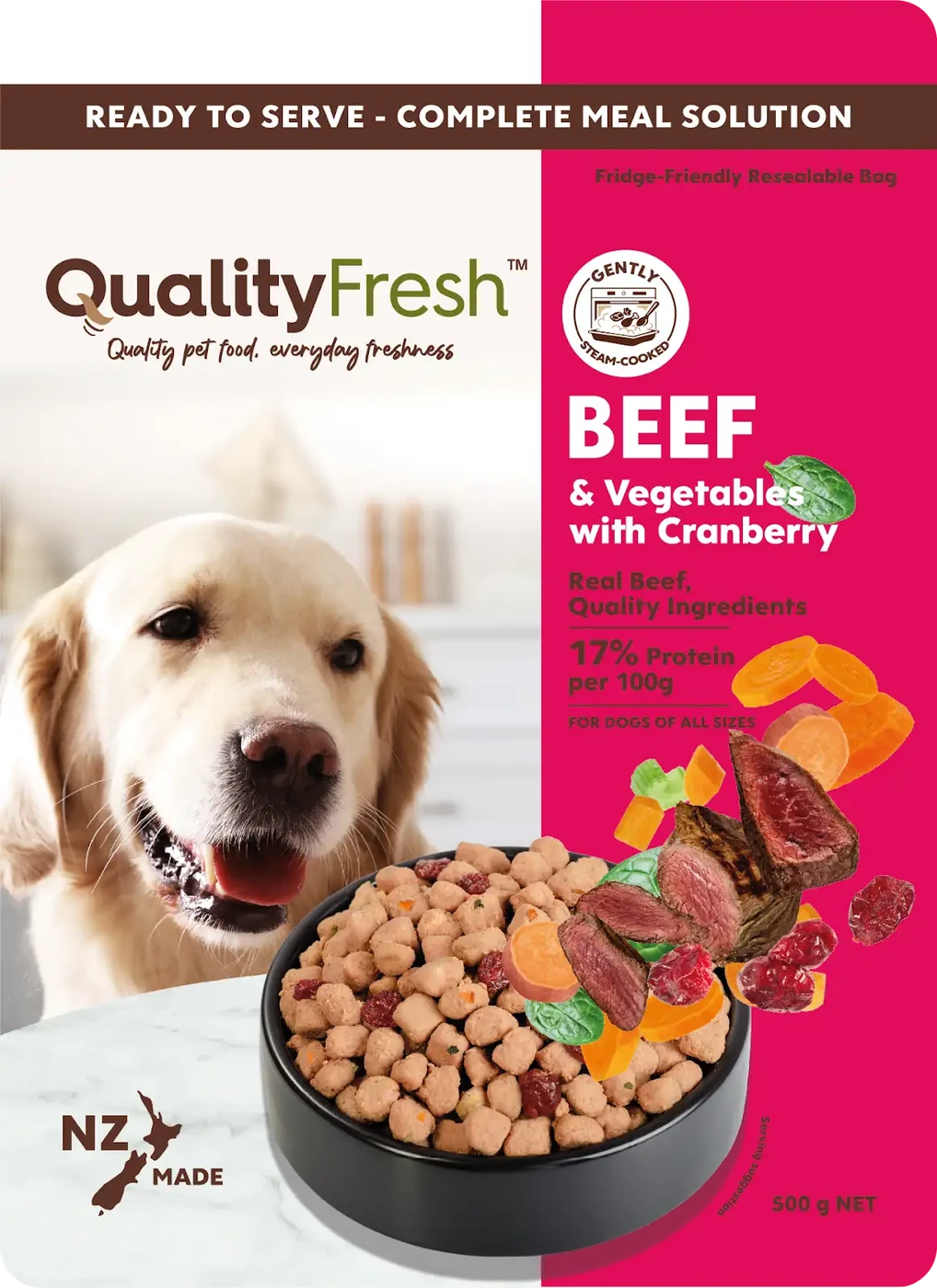
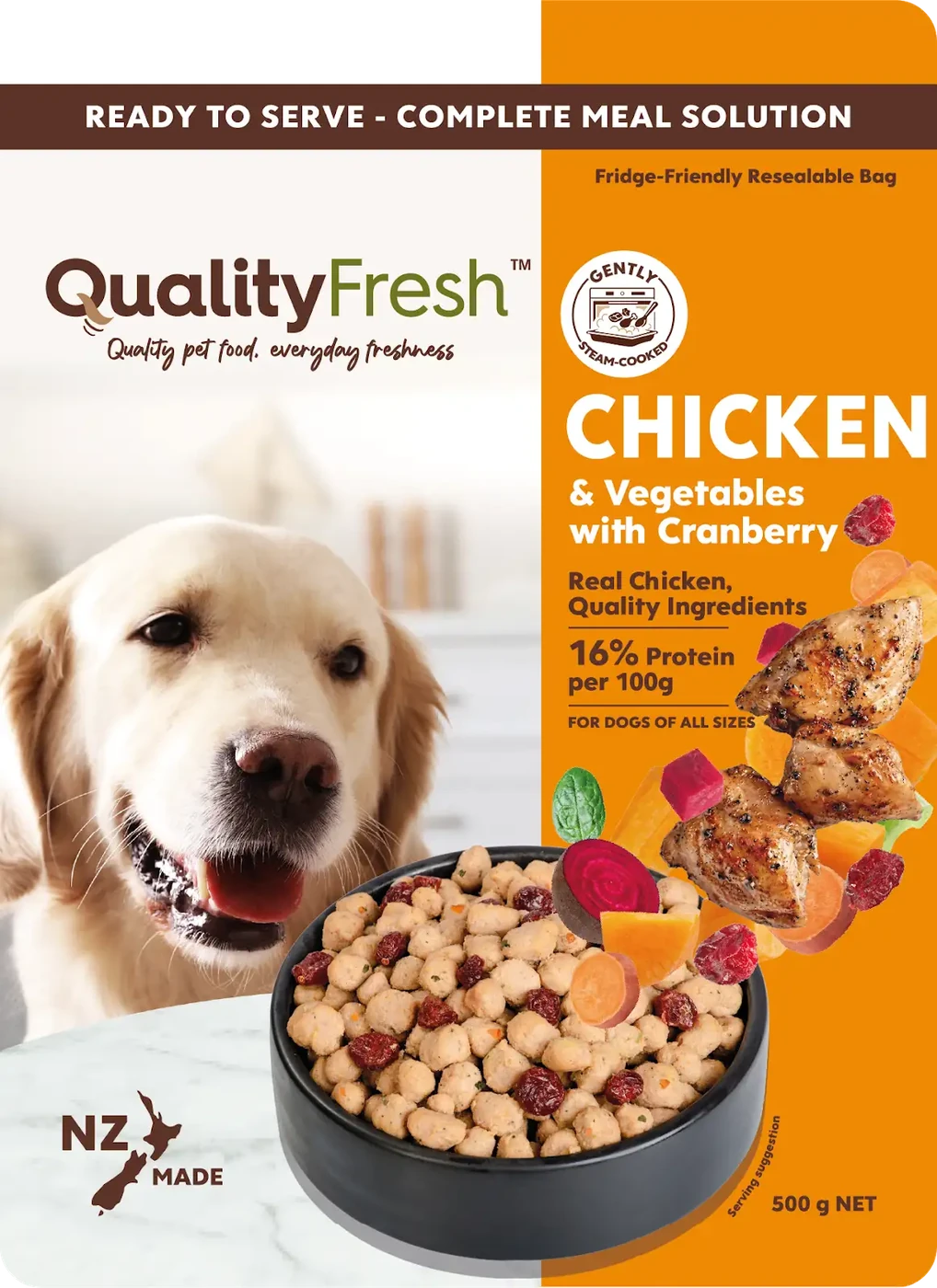
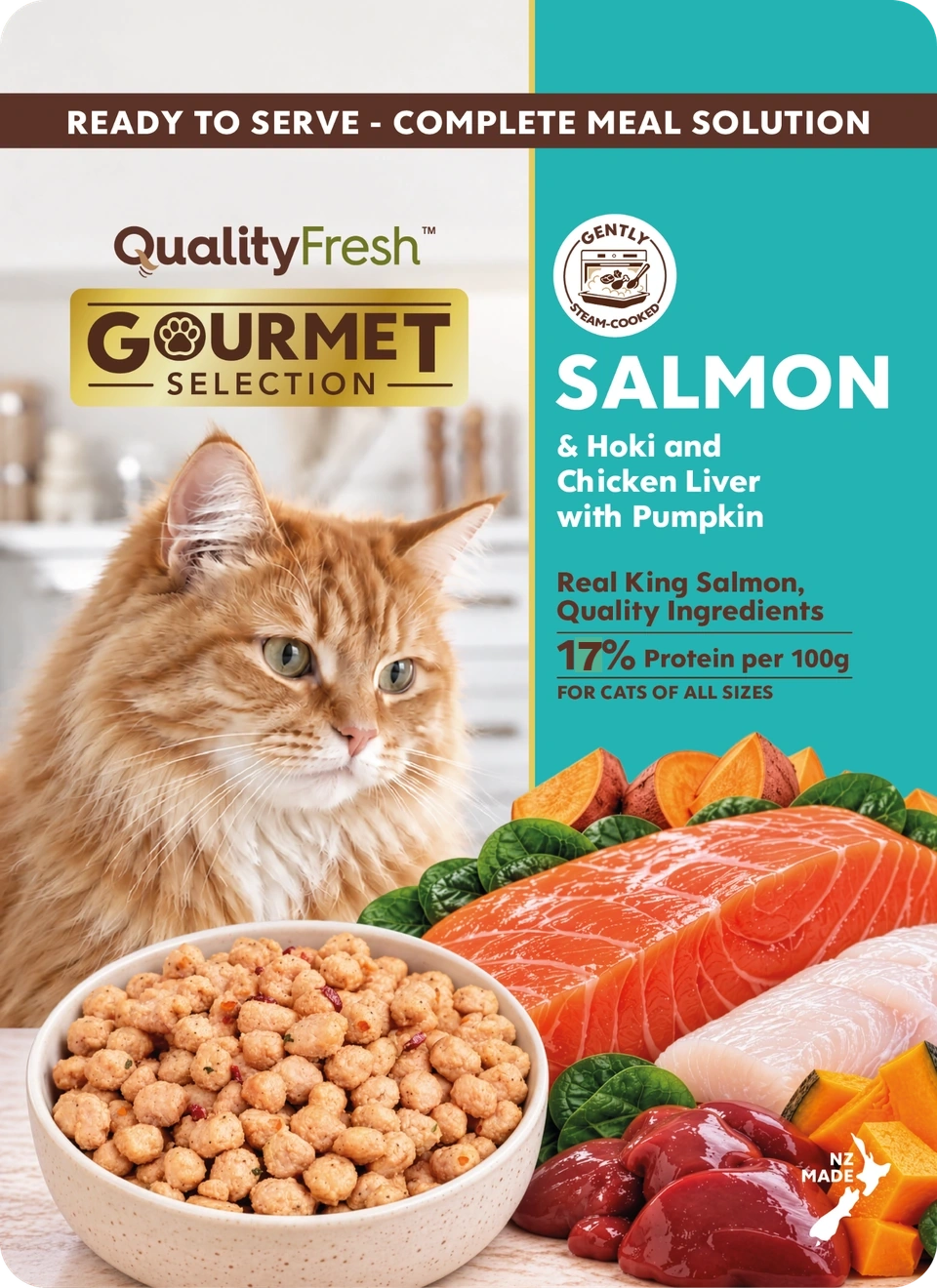
Find a fresh favourite for your dog or cat.
 GOOD FOOD. EVERYDAY FRESHNESS.